
How to Budget for a
Corporate Event
(Without Getting Burned)
- Most event budgets fail because they don't account for production costs until it's too late. Design and fabrication should be in the budget from day one.
- The cheapest quote is rarely the best value. Understanding what's included (and what isn't) matters more than the bottom line number.
- A 10–15% contingency buffer isn't optional. It's the difference between a smooth event and a stressful one.
- In-house production capability almost always delivers better value than a patchwork of vendors, even when the initial estimate looks higher.
- Your production company should be one of the first calls you make, not one of the last.
A corporate event budget goes sideways for predictable reasons. We've seen it hundreds of times, and we've also seen what actually works. If you're planning a corporate event and want a budget that holds up when things get real, here's the straight-talk version.
Start With Production, Not Catering
The most common budgeting mistake we see is building the event around venue and catering first, then trying to fit production into whatever's left. By the time someone calls us, they've already committed to a venue and a food-and-beverage minimum, and now they're asking how to get a custom scenic stage, full lighting rig, and LED wall for $8,000.
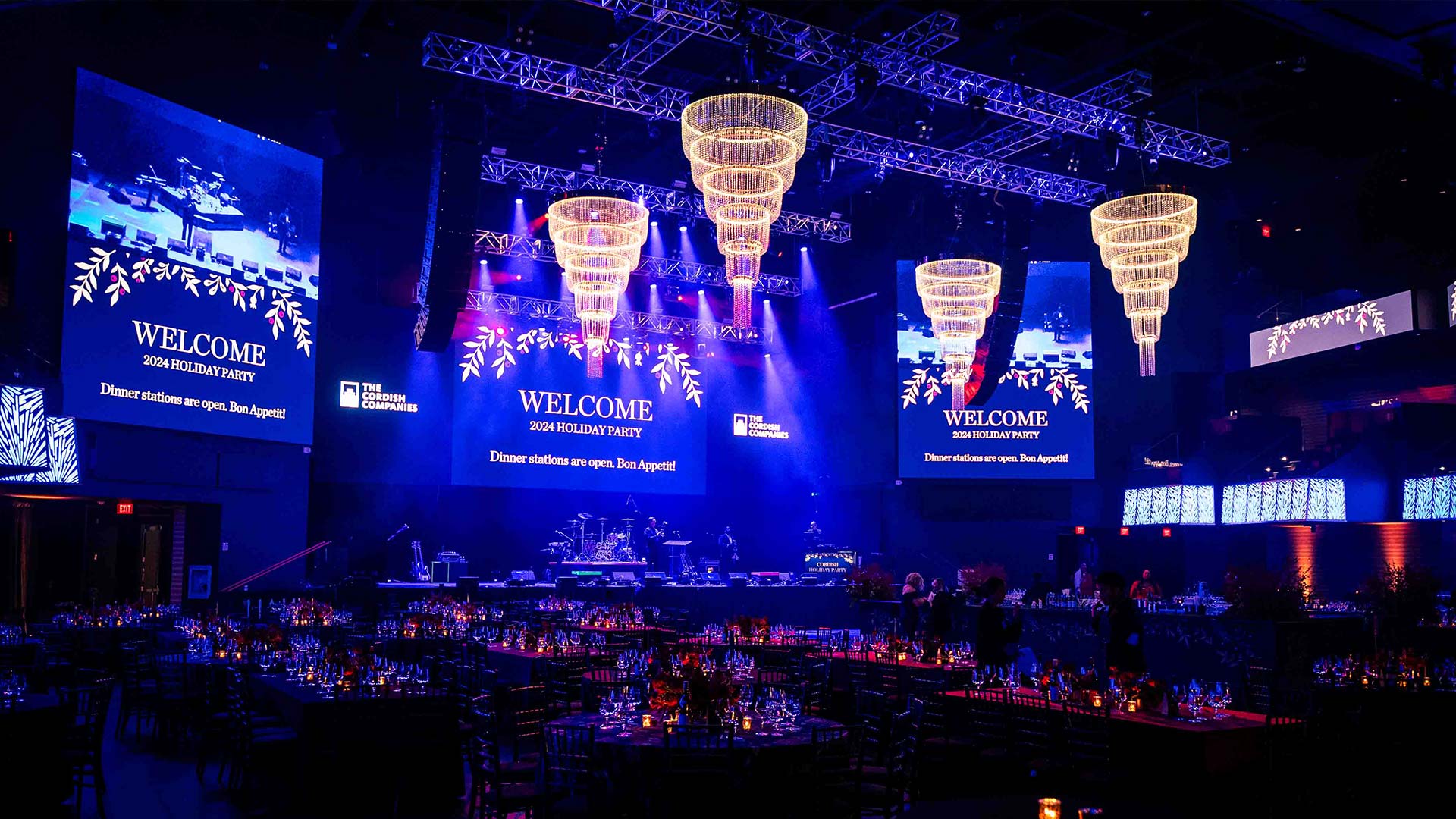
Production is the part of your event that guests actually experience. It's what makes the room feel like something. It should be in the budget from the very first conversation, not an afterthought once everything else is locked.
A rough rule of thumb: for a well-produced corporate gala, production typically represents 25–40% of the total event budget. That range moves based on the level of custom fabrication, the size of the room, and the technical complexity. If you're not allocating somewhere in that ballpark, you're either undershooting the vision or setting yourself up for a hard conversation later.
"Production is the part of your event that guests actually experience. It should be in the budget from the very first conversation."
EventPro Production Brief
Understand What's Actually in the Quote
When you receive a production quote, the number is almost meaningless without knowing what's behind it. Two companies can quote the same event at dramatically different numbers, and both can be accurate, because they're quoting completely different scopes.
Here's what to verify is included before you compare numbers:
Design and pre-production. Concept development, 3D renderings, floor plans, and client revision rounds. Some companies include this; many don't.
Fabrication vs. rental. Is the scenic custom-built, or is it pulled from a rental catalog? Custom fabrication costs more upfront and typically delivers a better result. Rental inventory can be a smart choice for certain elements. Know which you're getting.
Labor. Load-in crew, installation, show operation, and strike are all labor costs. Some quotes bundle them; some don't. Overtime rates for late load-ins and extended strikes can add meaningfully to the final number.
Delivery and logistics. Trucks, fuel, mileage, and crew travel if the event is out of market.
Ask every vendor: "What's NOT included in this quote?" The answer will tell you more than the quote itself.
Build in a Contingency, Always
Every experienced event professional will tell you the same thing: the budget you plan is never the budget you execute. Scope changes, venue surprises, last-minute client requests, and the general reality of live production mean something will shift between the planning stage and event day.
A 10–15% contingency buffer is not padding. It's insurance. Build it into your budget from the start, don't touch it unless you have to, and treat any unused contingency as a success rather than an overage to reclaim.
Companies that plan without a contingency almost always spend more than those that plan with one. The difference is whether those overages feel controlled or chaotic.
In-House vs. Patchwork: What It Really Costs
One of the questions we get most often is why an in-house production company like EventPro sometimes costs more than assembling a team of individual vendors. It's a fair question and it deserves a straight answer.
When you hire separate vendors for scenic, lighting, AV, and décor, each one adds markup, each one has their own logistics, and none of them are accountable for the gaps between their scopes. You're also the one managing four different project timelines, four different load-in schedules, and four different points of failure.
With a single in-house production company, one team owns the entire outcome. There are no gaps between vendors because there are no vendors. There's one company with a fabrication shop, a lighting inventory, an AV package, and a décor division, all coordinated by a single production manager. The budget conversation is also cleaner, because there's one number and one scope, not four quotes that may or may not add up to the event you actually want.
When to Call Your Production Company
The answer is earlier than you think. Most clients call us after they've signed a venue contract, locked a date, and committed to a guest count. That's workable, but the earlier we're in the conversation, the more options you have.
Production companies can influence venue selection (some spaces are dramatically more or less expensive to produce in), help you understand which elements of your vision are feasible at your budget, and flag potential issues before they become expensive surprises.
If you're six months out or more, you have the most flexibility. If you're three months out, you have good options. If you're six weeks out, we can still make it happen, but the menu gets shorter.
← Back to The Production Brief
Work With Us
You bring the vision.
We'll build the room.
Planners and direct clients both. Tell us what you're working with.
Get a Quote →