
Renting vs. Building:
What's the Real
Difference for
Your Event?
- Renting works well for functional, background elements: furniture, basic drape, standard staging. It breaks down when you need something that doesn't exist in a catalog.
- Custom fabrication costs more upfront but delivers a result that's specific to your event, your brand, and your space. Something rental inventory fundamentally cannot do.
- The real cost comparison isn't rental price vs. fabrication price. It's the total value delivered to your guests and your brand against everything you spent.
- Most events benefit from a smart mix of both. The skill is knowing which elements are worth building and which are worth renting.
- A production company that only rents will always try to fit your vision into what they have. A company that builds can fit what they build to your vision.
Walk into most events and you'll see the same bars, the same lounge furniture, the same pipe-and-drape backdrops. Most production companies are pulling from the same rental catalogs. It's not a criticism. Rental inventory is a legitimate, practical tool. But it has a ceiling, and understanding where that ceiling is will help you make smarter decisions about where to spend your production budget.
Here's an honest breakdown of renting versus event scenic fabrication: what each is good at, where each falls short, and how to make the right call for your event.
What Renting Actually Means
When a production company rents, they're pulling inventory from their own warehouse stock or sourcing from regional rental houses: standard furniture, pipe-and-base drape systems, basic staging decks, uplights, linens, generic bars and cocktail tables. The selection is broad, the availability is generally reliable, and the per-item cost is lower than custom fabrication.
Rental inventory works well for elements that are functional rather than focal: the chairs at tables, the perimeter drape that frames a room, the standard staging that a speaker stands on. These are elements guests interact with but don't necessarily notice, and there's no meaningful competitive advantage to building them custom.
The limitation of rental inventory is exactly what makes it cost-effective: it's designed to work for any event, which means it's optimized for none of them. When you want a bar that reflects your brand, a stage backdrop that matches your event's color palette, or an entrance installation that gives guests a moment, you've reached the edge of what rental can deliver.
If the element you're imagining could show up at any other event that week without looking out of place, it's probably a rental. If it needs to be specific to your event to work, it probably needs to be built.
What Custom Fabrication Actually Means
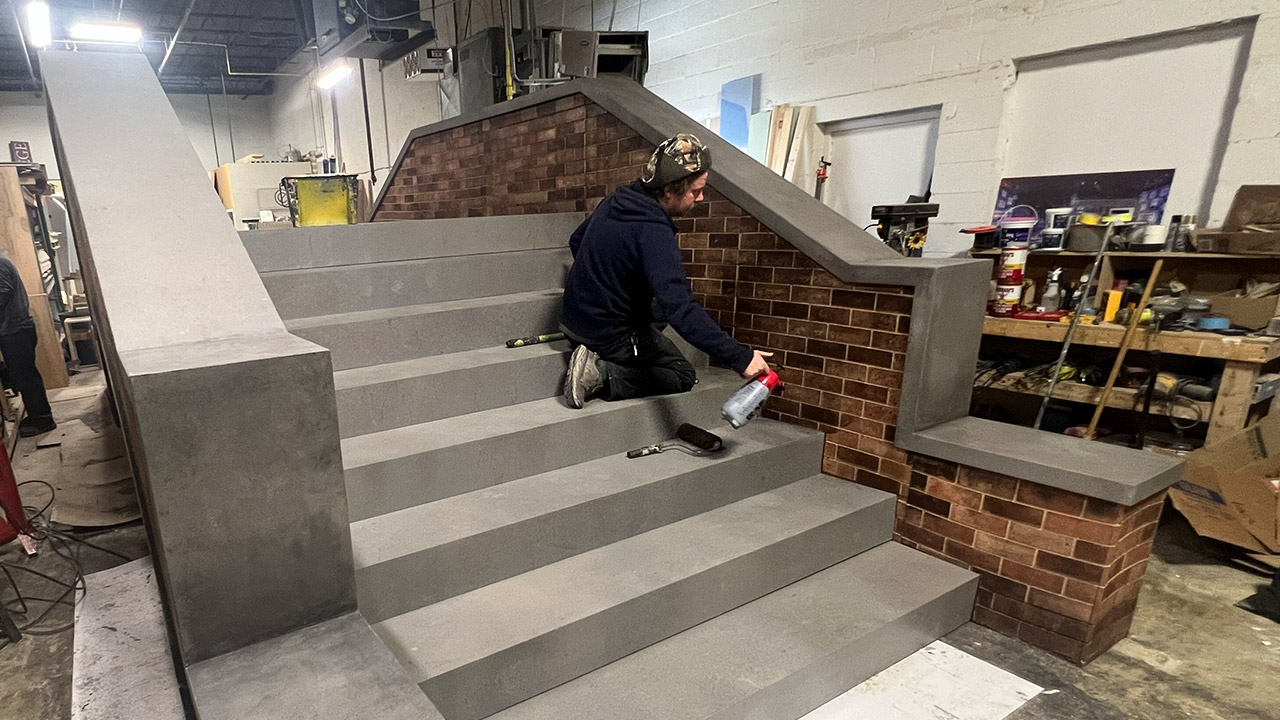
Custom fabrication means building scenic elements, props, bars, stage surrounds, entrance installations, and environmental pieces from scratch, in a shop, by a team of carpenters, metalworkers, CNC operators, painters, and scenic artists, specifically for your event.
The result is something that doesn't exist anywhere else. A 20-foot branded archway with your color palette and logo worked into the structure. A bar surround with laser-cut detailing that matches your event's design language. A stage backdrop that was designed alongside your event concept and built to exact dimensions for your specific venue.
This is the difference between a room that looks like an event and a room that looks like your event. Guests who walk into a custom-fabricated environment can feel that something specific was created for this occasion. It's hard to articulate, but it's unmistakable. It's the thing that makes an event memorable rather than just well-executed.
"Rental inventory is optimized for any event. Custom fabrication is optimized for yours. That's the whole difference."
EventPro Production Brief
Side by Side: Where Each Approach Wins
Neither approach is universally better. Here's an honest look at how they compare across the factors that matter most for event production decisions:
| Factor | Rental Inventory | Custom Fabrication |
|---|---|---|
| Upfront Cost | Lower. Pay per item, no build cost. | Higher. Labor, materials, shop time. |
| Uniqueness | Limited. Same catalog available to all. | Total. Built specifically for your event. |
| Brand Alignment | Minimal. Colors and finishes are fixed. | Complete. Built to spec, any color, any finish. |
| Lead Time | Short. Often available within days. | Longer. Fabrication needs weeks of runway. |
| Fit to Venue | Generic. Standard sizes and configurations. | Exact. Built to your room's specific dimensions. |
| Repeatability | Easy. Same items available for future events. | Built for one event (or stored for reuse) |
| Guest Impact | Functional. Supports the event. | Experiential. Becomes part of the event. |
| Design Flexibility | Limited to catalog options | Unlimited. If you can design it, it can be built. |
The Real Cost Comparison
The conversation about cost is more nuanced than it looks on paper. Yes, custom fabrication costs more upfront than renting the same square footage of generic scenic. But the comparison most clients make, rental price vs. fabrication price, is the wrong one.
The right comparison is: what does each approach deliver for your guests, your brand, and your event's objectives, and how does that weigh against what you spent?
A $4,000 rental bar is a functional piece of furniture. A $9,000 custom-fabricated bar that's been designed to match your event's aesthetic, finished in your brand colors, and built to the exact footprint your floor plan requires is a focal point of the room that guests photograph, remember, and talk about. Whether that premium is worth it depends on what your event is trying to accomplish. It's rarely an apples-to-apples comparison.
It's also worth noting that custom fabrication costs are increasingly competitive with high-end rental when you factor in delivery fees, damage waivers, and the multiple vendor touchpoints that come with sourcing from rental houses. For complex productions, an all-in custom quote from a single in-house production company often lands closer to a patchwork rental budget than clients expect.
Most Events Benefit from Both
The clearest answer to "should I rent or build?" is usually: both. A well-produced event is typically a thoughtful combination. Custom fabrication for the elements that define the look and feel, rental inventory for functional pieces that support the environment without needing to be distinctive.
The skill is knowing which elements are worth building. As a general principle, the focal points of a room, the stage, the entrance, the bars, the backdrop, are worth building custom because guests look at them, photograph them, and form their impression of the event around them. The supporting elements, chairs, linens, basic staging, backstage infrastructure, are often perfectly suited to quality rental inventory.
When you work with a production company that genuinely does both in-house, this conversation becomes part of the design process. They're not incentivized to push you toward rental (higher margin on their existing inventory) or toward custom (more shop hours). They're solving for the best outcome for your event, and they have the capability to deliver either.
What to Ask Your Production Company
Before you agree to a production proposal, it's worth understanding which elements are rental and which are built. Ask specifically:
"Which elements in this proposal are from your rental inventory, and which will be custom fabricated?" The answer shapes your understanding of what you're actually getting and gives you a clear picture of where the design flexibility is.
"If I want to customize [specific element], what does that involve?" Some production companies can modify rental pieces with custom wraps or finishes. Others fabricate entirely from scratch. Understanding the process tells you both what's possible and what it will cost.
"Is there anything in this proposal that you'd recommend upgrading to custom fabrication for this specific event?" A good production company will tell you honestly when a rental piece isn't quite right for what you're trying to accomplish, and when it is. That kind of candor is a sign of a partner, not just a vendor.
← Back to The Production Brief
Work With Us
Rent or build.
We do both.
Tell us what you're working with. We'll figure out the right approach together.
Get a Quote →